EHS Software: How to Digitize Occupational Risk Prevention and Gain Traceability (with Sabentis)
Occupational risk prevention is no longer managed “only” through documents.
Today, you need traceability, expiry date control, contractor coordination, audit-ready evidence, and indicators to make data-driven decisions — and this is where an occupational risk prevention software solution (EHS software) makes the difference.
More and more organizations are moving away from spreadsheets and shared folders toward EHS software: a platform that centralizes information, automates repetitive tasks, and turns prevention into a continuous, measurable process.
In this guide, you will find:
- What is an occupational risk prevention software and what is it used for
- Why digitizing occupational risk prevention is no longer optional
- What a modern occupational risk prevention software should include
- Common mistakes when choosing occupational risk prevention software
- Sabentis: occupational risk prevention software to centralize, automate, and connect prevention
- Key Sabentis functionalities as occupational risk prevention software
- Typical use cases by company type
- What indicators can you measure with occupational risk prevention software
- Technologies applied to prevention: from data to proactive prevention
- Occupational risk prevention, sustainability, and ESG: why they are connected
- How to implement occupational risk prevention software
- Frequently asked questions about occupational risk prevention software
- Conclusion: the future of prevention depends on connected occupational risk prevention software
What is an occupational risk prevention software and what is it used for
An occupational risk prevention software is a digital solution that enables the centralized management of occupational risk prevention and occupational health and safety (OHS) processes: from documentation and risk assessments to preventive planning, contractor coordination, and action tracking.
This approach is based on technical criteria widely developed in Spain by the National Institute for Safety and Health at Work (INSST), which promotes integrated, process-based preventive management. One example is the NTP-330 methodology for risk assessment.
In practice, a good occupational risk prevention software helps you to:
- Have a single source of truth (no versions or duplicates)
- Record who did what, when, and with what evidence (traceability)
- Automate alerts (expirations, reviews, pending actions)
- Prepare for inspections and audits with less stress
- Measure preventive performance using real-time indicators
Why digitizing occupational risk prevention is no longer optional
Today’s complexity makes managing occupational risk prevention “manually” fragile. Multi-site operations, remote work, regulatory changes, contractors, and frequent audits increase the risk of:
- Loss of documents or lack of version control
- Delays in audits and inspections due to disorganized evidence
- Difficulty analyzing risks preventively (reactive approach only)
- Excessive administrative burden for OHS technicians
- Lack of engagement from managers and workers (prevention does not reach daily operations)
Properly implemented digitalization addresses this with one key idea: moving from files to systems. In other words, managing prevention as a connected process rather than as a set of isolated documents, in line with the recommendations of the European Agency for Safety and Health at Work (EU-OSHA) on the impact of digitalization on prevention. This is the essence of the digitalization of occupational risk prevention.
What a modern occupational risk prevention software should include
Quick checklist: 12 criteria for choosing occupational risk prevention software
- Real document management control: versioning, expirations, responsible parties, permissions, traceability, and evidence
- Risk assessments and updates: methodologies, reviews, preventive measures, change history
- Preventive planning and corrective actions: assignment, deadlines, evidence, tracking, escalation
- Contractor coordination (CAE): document validation, access control, statuses, alerts
- Training, competencies, and expirations: catalog, role-based tracking, renewals, evidence
- Indicators (KPIs) and dashboards: real-time data, segmentation by site, area, contractor, etc.
- Configurable workflows: approvals, validations, notifications, rules by site/activity
- Multi-site and organizational hierarchies: global view with site-level detail, without losing consistency
- Integrations: HR, ERP, BI, access control… to avoid duplication and silos
- Security and permissions: roles, change audits, activity logs, granular access
- Usability (real adoption): if the team does not use it, it is useless—interface, mobile access, simplicity
- Support and implementation: guidance, data migration, training, continuous improvement
If a solution “does everything” but does not provide traceability or adoption, you will end up going back to Excel.
Common mistakes when choosing occupational risk prevention software
- Choosing only for “compliance” and not for real-world use (prevention lives in day-to-day work)
- Not demanding traceability: without action logs and evidence, audits become complicated
- Buying a “standalone module” that does not connect assessment → planning → follow-up
- Ignoring integrations: if data originates in HR and is copied manually, errors will occur
- Not defining responsibilities and workflows (software does not fix nonexistent processes)
Sabentis: occupational risk prevention software to centralize, automate, and connect prevention
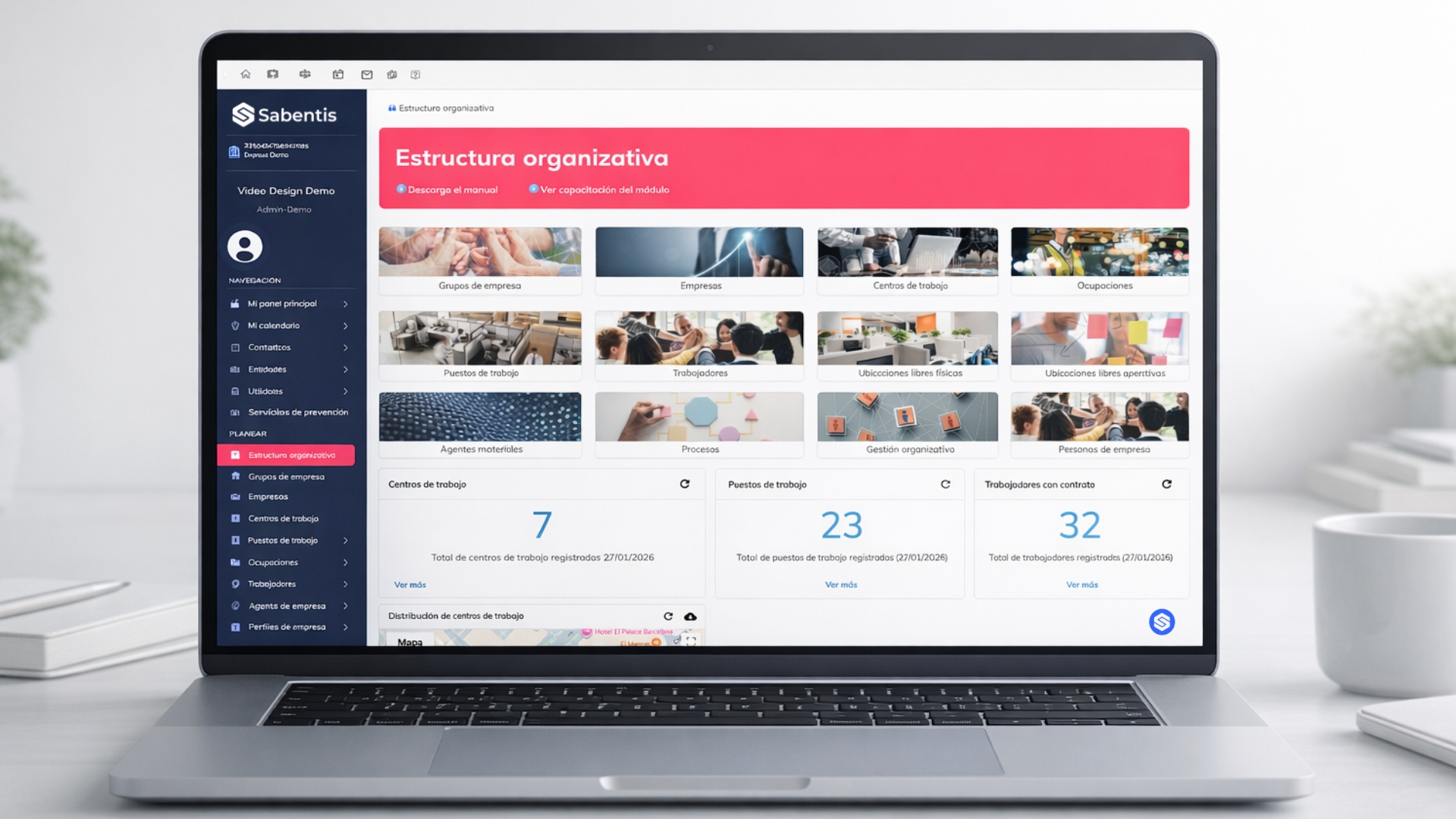
Sabentis is an occupational risk prevention software (OHS) designed to digitize preventive management as a system, connecting people, processes, and data within a single platform.
Instead of working with isolated or rigid tools, Sabentis functions as a digital ecosystem that covers the entire preventive cycle:
- Risk identification and assessment
- Preventive planning and actions
- Document management and evidence
- Contractor coordination (CAE)
- Training, competencies, and expirations
- Dashboards and indicators
- Integrations with corporate systems (HR, ERP, BI)
Result: occupational risk prevention moves from being reactive to becoming a predictive, automated, and data-driven process.
Key Sabentis functionalities as occupational risk prevention software
| Area | What it solves | Direct benefit |
|---|---|---|
| Occupational risk prevention document management | Centralizes, controls versions, expirations, and evidence | Fewer errors and faster audits |
| Digital risk assessment | Continuous, traceable updates | More precise and proactive prevention |
| Contractor coordination (CAE) | Document validation and status control | Reduced legal risk and operational bottlenecks |
| Training and competencies | Role-based control and expirations | Compliance plus capability improvement |
| KPIs and dashboards | Real-time indicators | Data-driven decisions, not intuition |

KPI dashboards and data traceability in occupational risk prevention software
Dashboards and KPIs for monitoring and decision-making in occupational risk prevention software.
Typical use cases by company type
1) Multi-site companies (industry, logistics, retail)
These organizations need to maintain global consistency without losing site- and activity-level detail.
With occupational risk prevention software, they can manage assessments by site, plan and track actions with evidence, and consistently compare KPIs across locations.
2) Organizations with many contractors (construction, energy, maintenance)
In contractor-heavy organizations, the main bottleneck is usually contractor coordination: documentation, expirations, and access control.
Occupational risk prevention software facilitates validation, automates alerts, displays statuses, and provides traceability for inspections.
3) OHS departments with high administrative workload
In OHS departments, much time is spent managing expirations, reports, and manual follow-up.
Occupational risk prevention software automates reminders, approval workflows, and recurring reports, reducing operational burden.
What indicators can you measure with occupational risk prevention software
For digitalization to be truly manageable (not just documentary), these KPIs usually make the difference:
- Percentage of preventive actions closed on time
- Upcoming expirations (documentation / training / fitness)
- Risk evolution by site/area/activity
- Average time to resolve corrective actions
- Participation indicators (notifications, communications, reports)
- Contractor coordination (CAE) compliance by contractor/project
- Trends by risk type (ergonomic, chemical, mechanical, psychosocial, etc.)
Technologies applied to prevention: from data to proactive prevention
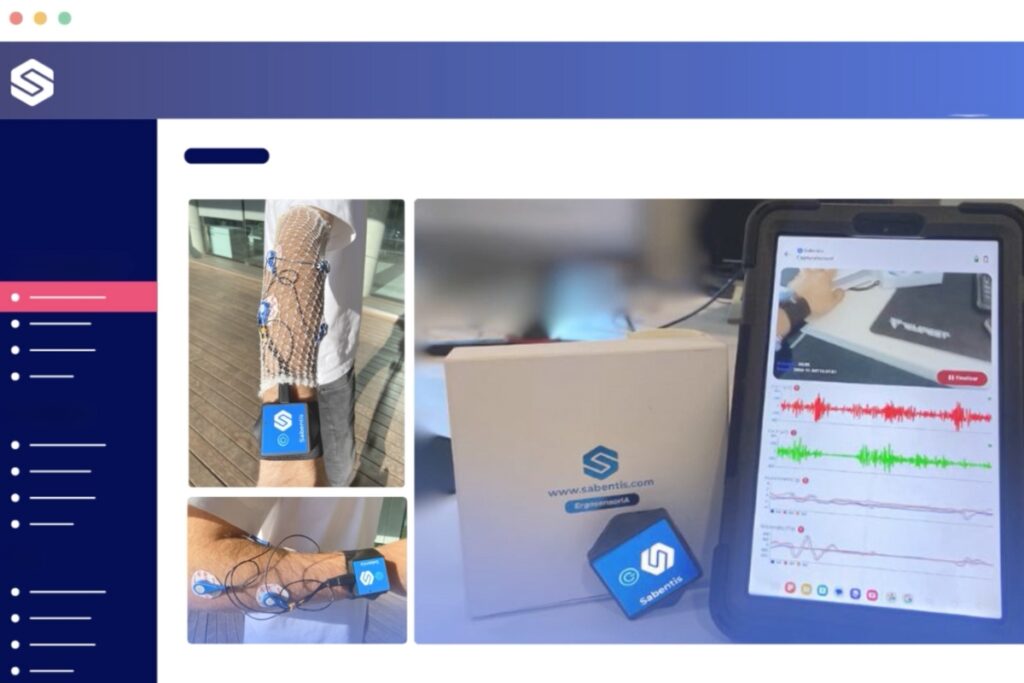
Modern prevention improves when software does not only “store” information, but also analyzes it and helps prioritize.
Artificial Intelligence and data analysis
Analytical models applied to occupational risk prevention can detect patterns, prioritize risks, and support data-driven decision-making by site, activity, and incident history. This is the same logic behind how AI anticipates accidents.
Workflow automation
Alerts, expiration control, document validation, reports, and reminders reduce manual tasks and ensure execution and follow-up of preventive actions.
Integrations (HR, ERP, BI)
Interoperability avoids silos: data is shared across systems, kept consistent, and transformed into a global, coherent view of occupational health and safety. A clear example is the integration between Sabentis Prime and Plus.
Occupational risk prevention, sustainability, and ESG: why they are connected
Prevention directly impacts the “S” pillar of ESG (people) and operational sustainability:
- Fewer accidents and less absenteeism
- Greater well-being and occupational health
- Traceable data for internal reporting
- Reputation and preventive culture
A digital occupational risk prevention platform helps move from “compliance” to managing health and safety with real impact.
How to implement occupational risk prevention software
A practical approach, adaptable to the size and resources of each organization, usually works best:
- Diagnosis and process mapping: identify existing documentation, how risks are assessed, how prevention is planned, and who makes decisions.
- Migration and structure: define sites, roles, permissions, workflows, and import documentation and catalogs.
- Automation and dashboards: expiration control, action tracking, periodic reporting, and baseline indicators.
- Continuous improvement: progressive adjustments, new integrations, and extension of the system to contractors or additional sites.
Frequently asked questions about occupational risk prevention software
What is the difference between PRL, OHS, and EHS?
PRL focuses on occupational risk prevention, the common framework in Spain. OHS refers to occupational health and safety. EHS broadens the scope to include environmental aspects.
Is occupational risk prevention software useful for audits and inspections?
Yes, if properly implemented. Within the Spanish legal framework, the key is that the software provides traceability, evidence, responsible parties, dates, and clear records of actions and documentation.
Which modules are essential?
At a minimum: document management, risk assessments, preventive planning and action tracking, training, and expiration control; and, if contractors are involved, contractor coordination (CAE) modules.
How is team adoption ensured?
Mainly through three factors: good usability, simple (non-bureaucratic) workflows, and onboarding that turns the software into the standard way of working.
Can it integrate with HR or ERP systems?
It should. Integration reduces duplication and errors and improves data consistency related to roles, sites, people, and organizational changes.
Conclusion: the future of prevention depends on connected occupational risk prevention software
Prevention cannot rely on tools of the past when work environments are increasingly complex. Occupational risk prevention software enables centralized, automated, and measurable management of occupational health and safety with a continuous, proactive approach.
Sabentis is designed for this scenario: a scalable, multi-site, data-driven platform that digitizes occupational risk prevention end to end.
Request a Sabentis demo and discover how to digitize occupational risk prevention in your organization.